Year 3
CROESO i BLWYDDYN TRI!
Teachers:
MISS LAWTON - MULBERRY CLASS
MR FRYER - MAGNOLIA CLASS
A very warm welcome to Year Three's class page. As a team, we are very excited to share the learning experiences of the pupils, important information and overviews of the contexts for learning.
‘There is no Wi-Fi in the forest, but I promise you will find a better connection.’–Ralph Smart
Our new context for learning this term is 'Get Connected!' Pupils will be learning about how we are connected to ourselves, each other and nature. The theme of diversity and interconnectedness will run throughout the context. To support this, there will be lots of exciting learning opportunities on offer. For example, to bring the curriculum to life, pupils will experience outdoor learning in the local environment and beyond. They will monitor and build ecosystems to showcase to external visitors.
In the following weeks, the pupils will be provided with opportunities to experience:
- Creating plants and animals using a range of resources for Stop Motion
- Drawing scientific illustrations and their Latin names
- Collecting examples of birdsong in nature to create a soundscape of Danescourt's grounds
- Carrying out investigative tasks using numeracy skills. For example, using sensors to measure light, moisture and temperature of habitats
- Using literacy skills to write explanations of scientific processes
- Asking good questions and using their knowledge of what they know to support their research skills using a range of sources
- Using knowledge of measurement to record growth of plants
- Applying what they know about number to survey plants and animals in the immediate environment
- Contributing to deep and meaningful questions based on a variety of stimuli using visible thinking routines and Philosophy for Children (P4C) sessions, e.g. environmental impact
- Understanding the themes of diversity, interconnectedness, responsibility and how they relate to the world in which we live
- Exploring and investigating spirituality and nature within religion
- Immersing themselves in real-life experiences; to include exploring the health benefits of plants
- Comparing scientific names for plants and animals in multiple languages using their knowledge of their own language to decode meaning
- Looking at local, national and international contexts, (decision-making, ethical responsibility, and the rights of the child) through an RVE lens.
- Understanding how nature impacts on human wellbeing
- Comparing two habitats using meanwhile, elsewhere
- Producing recipes in their own language to share
- Researching using DCF skills to present information linked to Science and Technology
- Undertaking sport-related activities using thinking together
- Using computational thinking skills to design and implement algorithms for exploring habitats
Our class read this term is:
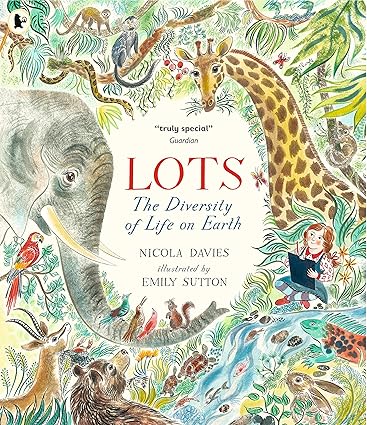
'There are living things everywhere: the more we look, the more we find. There are creatures on the tops of the tallest jungle trees, at the bottom of the coldest oceans, even under the feathers of birds and in boiling volcanic pools. So how many different kinds are there? One, two, three ... lots! Lots is a beautifully illustrated introduction to the concept of biodiversity.'